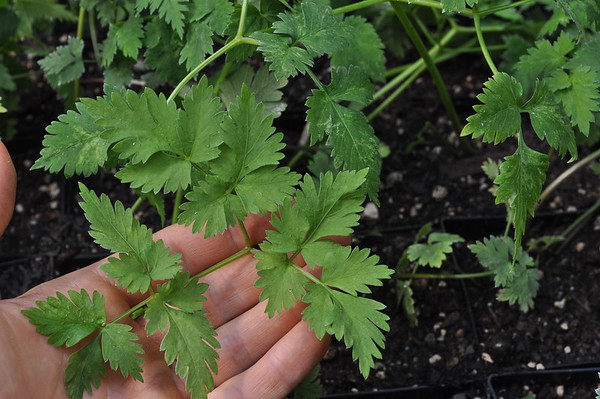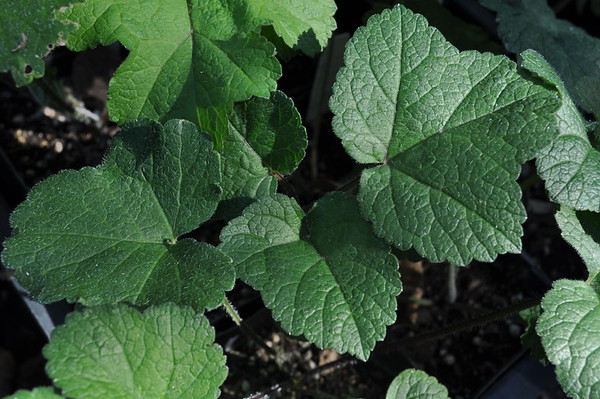
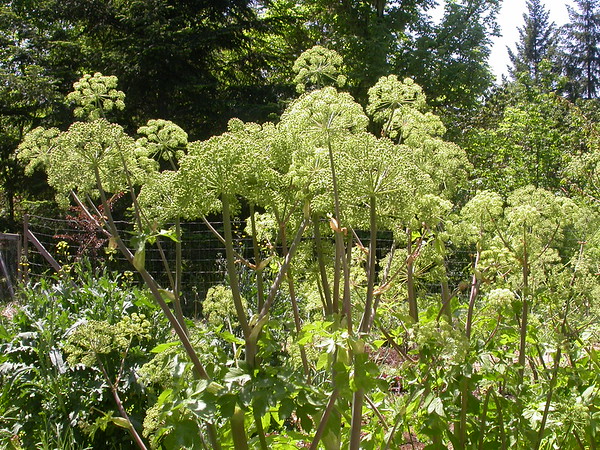
This is one of our favorite spring-producing plants. A biennial, Angelica shoots out of dormancy in winter and grows quickly to its full height, up to six or seven feet. In the parsley family, Angelica has a stunning display of white flower whorls in spring which are great for pollinators and beneficial insects. If you let some seed mature, you will always have Angelica in your garden, even after the flowering plant dies. It prefers garden soil, full sun and reasonable drainage. We harvest the young leaf stalks and boil them in honey to make a delicious and nutritious candy. We also steep the leaves, stems, and seeds in brandy and a little vegetable glycerine to make an excellent after-dinner digestive aid. Be cautious - this emmenagogue can be dangerous to use during pregnancy.
There are several species of Angelica that grow well here in the Willamette Valley including garden angelica, dong quai, pubescent angelica (du huo), and dahurican angelica (bai zhi). They are all warming and bitter carminative and digestive aids, and some have additional actions on the lymphatic system and the reproductive system. Although garden angelica (A. archangelica) is the largest and most mild flavored of them all, it is the only species we grow that is monocarpic. That is, once it goes to seed, it dies. The other species are all perennials.