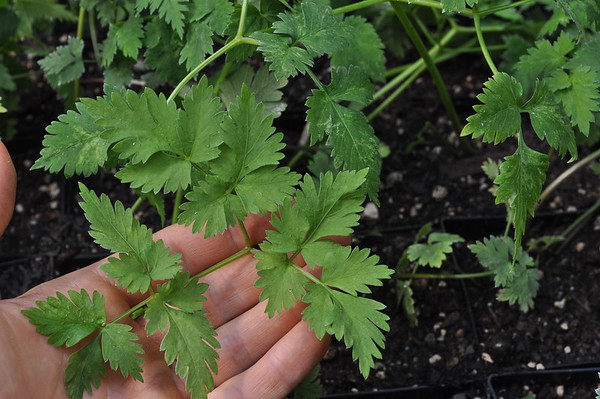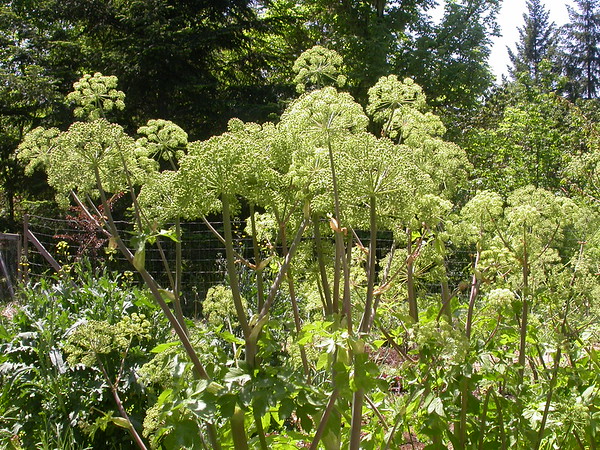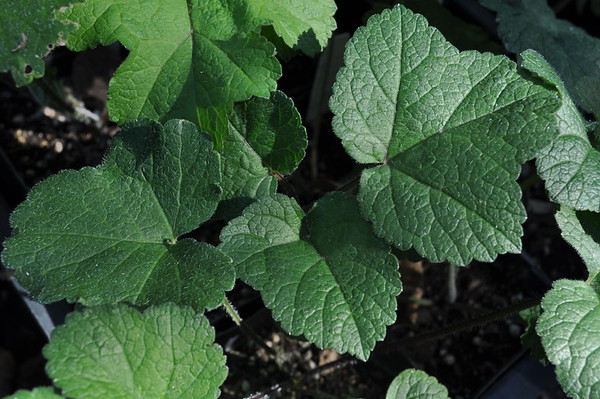
Also known as Bai Zhi in Traditional Chinese Medicine, this angelica species is native to northeastern Asia in Russia, China, Korea, Japan, and Taiwan. This is the first year we’ve grown it in our gardens, and so far, it seems to be quite similar to garden angelica (A. archangelica) in its habit and requirements.
Medicinally, it’s used as a warming and bitter carminative and digestive aid, decongestant, anti-inflammatory, and anti-fungal, which is again very similar to garden angelica. However, the root is also traditionally added to soups in a way that is similar to parsnip, and so I imagine it to be more palatable and less aromatic and pungent than garden angelica. We plan to find out!
There are several species of Angelica that grow well here in the Willamette Valley including garden angelica, dong quai, pubescent angelica (du huo), and dahurican angelica (bai zhi). They are all warming and bitter carminative and digestive aids, and some have additional actions on the lymphatic system and the reproductive system. Although garden angelica (A. archangelica) is the largest and most mild flavored of them all, it is the only species we grow that is monocarpic. That is, once it goes to seed, it dies. The other species are all perennials.