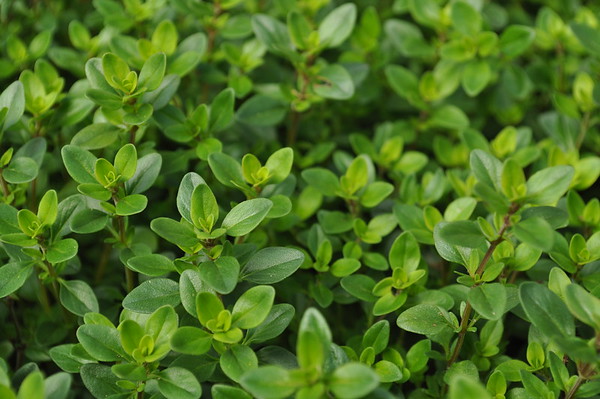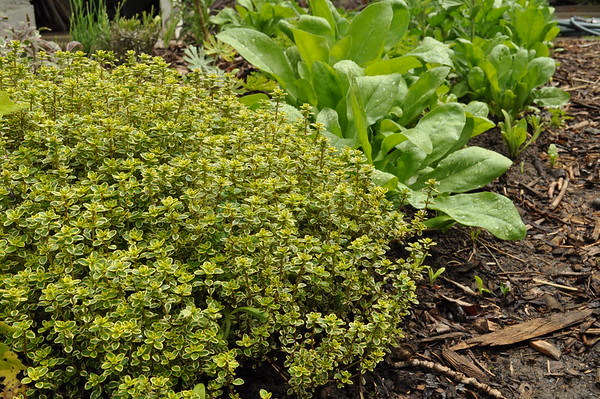
Orange scented fragrant thyme has a compact growth form with small leaves more similar to French thyme and German winter thyme than any of the other varieties. What sets it apart is the scent - spicy sweet oranges - wow!
Who couldn’t use more thyme in their day? The foliage and flowers make tea that not only tastes great, but also has all of the healing properties of thyme oil: antibacterial, carminative, soothing on the stomach, and eases congestion in the sinuses and lungs. Thyme thrives especially when you pinch the growing tips to make it more shrubby and branched so that it can form a miniature hedge. It grows best with nearly full sun, though some varieties can tolerate some shade. Although rich soil is best, thyme will also grow in poor soil as long as it has good drainage.
After 3-4 years, the lower stems of thyme plants can often get very woody and the whole plant will grow more slowly unless it’s in full sun with rich moist soil. If your plant is woody and not growing very quickly, you might try burying the lower stems with a nice rich compost so that the upper shoots stick out of the top. The upper stems will send out new roots into the fluffy and fertile layer of compost, reinvigorating the plant.