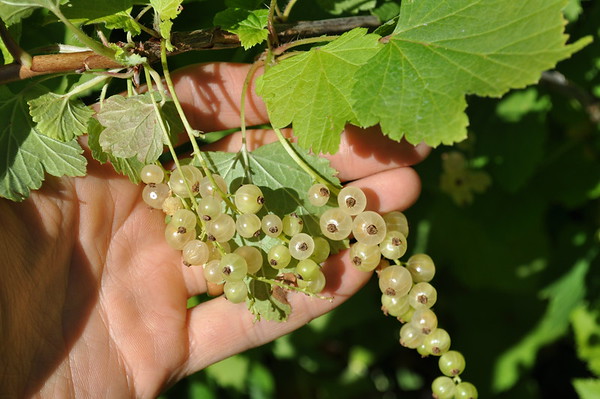
White currants are the sweetest of the European currants and White Imperial has great flavor. Almost all currant lovers that we talk to choose white currants for sweet flavor. These shrubs are generally no more than 4-5 feet tall and wide. If pruned yearly, they can be very productive. Clusters of translucent berries are also beautiful. They prefer a little shade but will be very productive in sun with enough water. They are very easy to grow in our climate.
Currants are a wonderful small fruited shrub that quickly grows to about 4 feet tall and continues layering and spreading horizontally. They thrive in sun but also fruit well in partial shade. They handle soil conditions all the way from heavy clay to sandy loam. We like to plant them in between fruit trees in an orchard or forest garden, as they feed pollinators early in the season, and once the taller trees grow, they are easy to transplant to a new location.
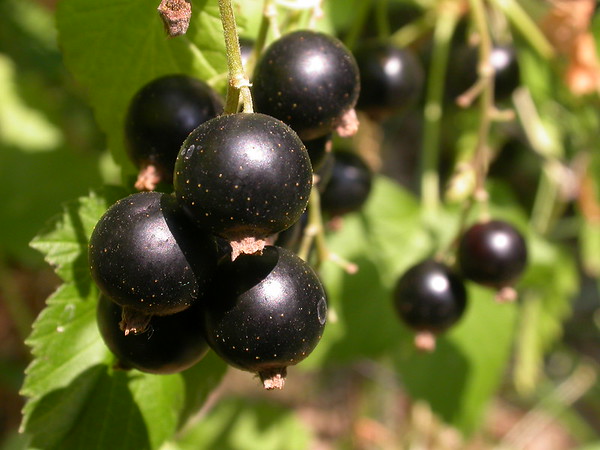
White currants are the sweetest, red the tartest, and black have an excellent unique flavor. It’s easy to tell black currants apart from the rest because the wonderful flavor of their fruit is also found in their leaves all season. Clove currant has beautiful yellow flowers and fruit with an aromatic and sweetly tart flavor.