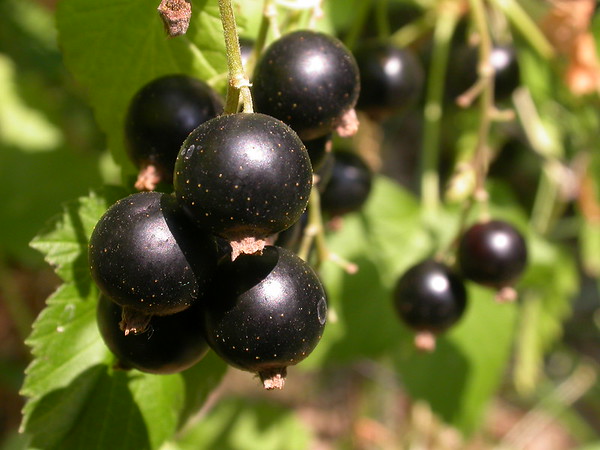
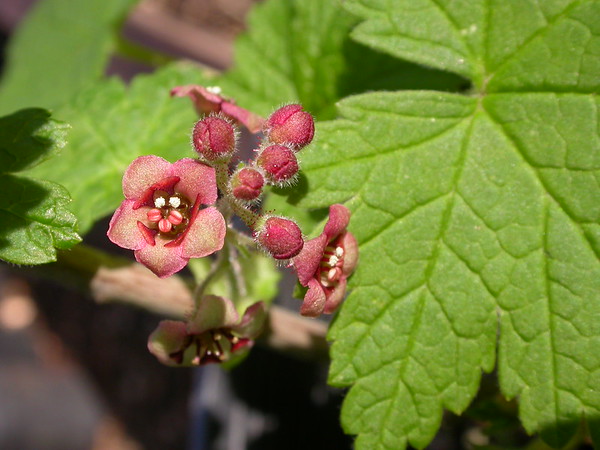
This currant is native to the Northwest, growing along streams in partial shade. The delicate pink flowers bloom in spring and the delicious purple fruit ripens in early summer. It does not have thorns.
Although stream currants like wet soil, they don’t need to grow near a creek as long as they have some irrigation in summer. We suggest you find a place where it can sprawl or hang over a wall because the lovely branches cascade like little waves over the ground rather than growing upright like other currants.
Currants are a wonderful small fruited shrub that quickly grows to about 4 feet tall and continues layering and spreading horizontally. They thrive in sun but also fruit well in partial shade. They handle soil conditions all the way from heavy clay to sandy loam. We like to plant them in between fruit trees in an orchard or forest garden, as they feed pollinators early in the season, and once the taller trees grow, they are easy to transplant to a new location.
White currants are the sweetest, red the tartest, and black have an excellent unique flavor. It’s easy to tell black currants apart from the rest because the wonderful flavor of their fruit is also found in their leaves all season. Clove currant has beautiful yellow flowers and fruit with an aromatic and sweetly tart flavor.